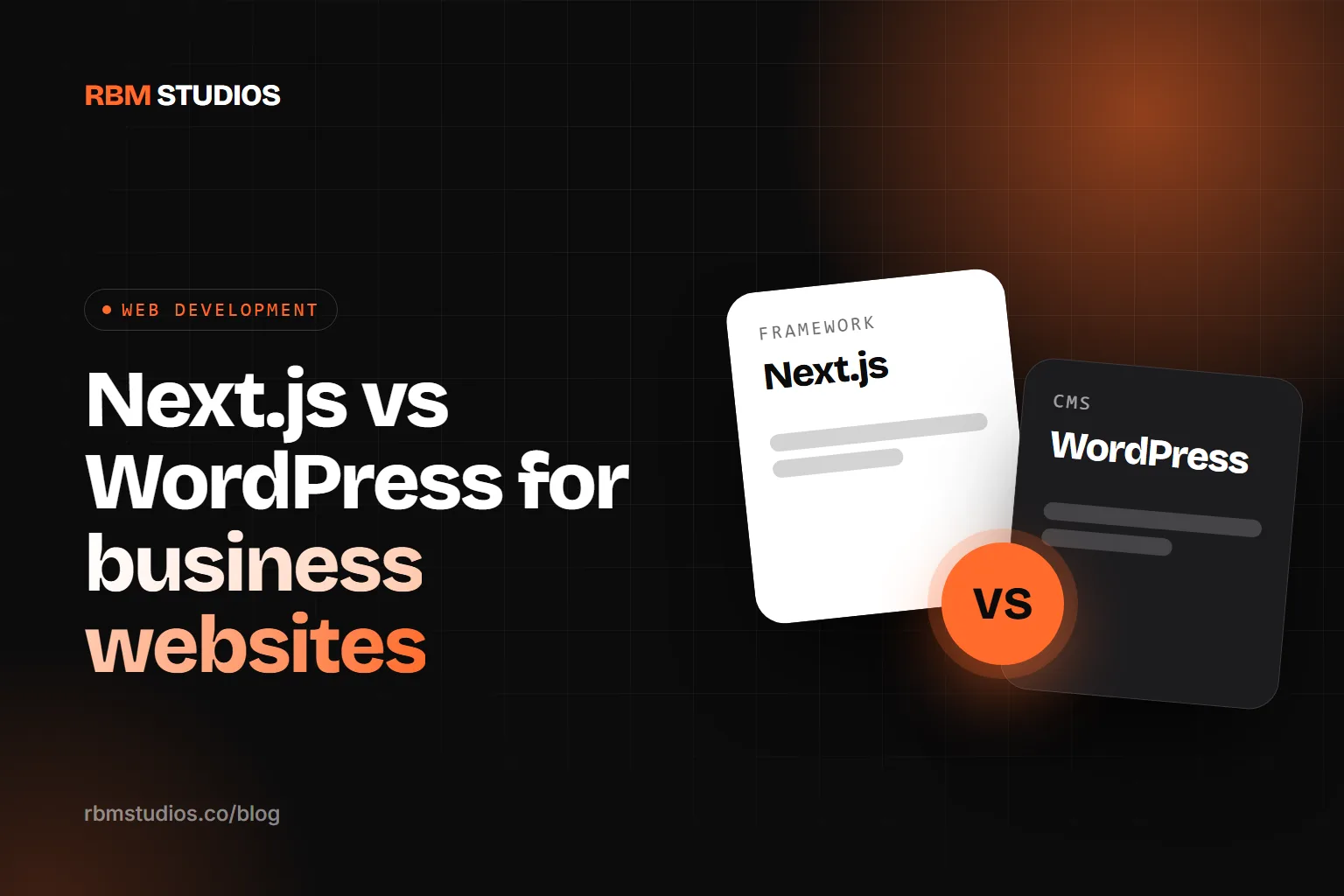
WordPress runs a huge share of the web — over 40% of all websites, according to W3Techs. Next.js, the React framework built by Vercel, is used by some of the world’s biggest brands. Both are excellent. Both are wrong for some businesses.
We build most of our websites with Next.js, so we’re not neutral. But we’ll be honest about when WordPress is the better choice.
The Short Answer
- Choose WordPress if you publish a lot of content, want to manage everything yourself with plugins and themes, and speed and custom features are not your top priority.
- Choose Next.js if speed, SEO, security and a custom design matter, or if your website will grow into something app-like — logins, bookings, dashboards.
- Want both? Headless WordPress uses WordPress as the editing back-end and Next.js for the website itself.
Side-by-Side
| WordPress | Next.js | |
|---|---|---|
| Speed | Good with careful theme and plugin choices; slows down as plugins pile up | Very fast out of the box — pages are pre-rendered and images optimised |
| SEO | Strong with plugins like Yoast or Rank Math | Strong by design — full control over metadata, schema and Core Web Vitals |
| Security | Needs regular updates; most vulnerabilities come from plugins | Small attack surface — no database or admin login exposed on the website itself |
| Editing content | Familiar dashboard, easy for anyone | Through a headless CMS or a simple admin we set up |
| Design freedom | Limited by the theme unless custom-built | Anything you can design can be built |
| Cost to build | Often lower for template-based sites | Slightly higher for custom work |
| Running costs | Hosting, premium plugins and regular updates | Often free or low-cost hosting; fewer moving parts |
| Best for | Blogs, news and content-heavy sites | Business websites, startups, stores and web apps |
Speed: Why It Matters More Than You Think
Visitors leave slow websites, and Google uses page experience — including Core Web Vitals — as one of its ranking signals.
A WordPress site can be fast, but it takes discipline: a lightweight theme, few plugins, caching and image optimisation. Each new plugin adds code that every visitor has to download.
Next.js pre-renders pages and only sends the JavaScript each page needs. Image optimisation, font loading and code splitting are built in. Our recent Next.js builds regularly score in the mid-to-high 90s for Lighthouse performance.
Security
WordPress core is well maintained. The risk comes from plugins and themes — security researchers consistently find that the large majority of WordPress vulnerabilities are in plugins, not core. Sites that aren’t updated regularly become easy targets.
A Next.js website usually has no database or admin login on the public site at all. Content comes from a separate CMS, so there’s far less for attackers to aim at.
Editing Content
This is WordPress’s biggest strength. The dashboard is familiar, and adding a page or a blog post needs no developer.
With Next.js, we connect a headless CMS — such as Sanity, Strapi or Contentful — or a simple custom admin, so your team can still edit text, images and blog posts without touching code. It’s a different screen, but just as easy once it’s set up.
Cost
A template-based WordPress site is often cheaper to build. But factor in premium themes and plugins, better hosting and regular maintenance, and the gap narrows quickly.
For reference, our websites start at ₹7,999 / $299 for up to five pages, ₹14,999 / $599 for up to ten pages with a blog, and ₹29,999 / $1,199 for a custom-designed Next.js website. Fully custom builds start at ₹49,999 / $1,999. See every package on our pricing page.
When WordPress May Suit You Better
- You publish several articles a week and your editors already know WordPress
- You depend on a specific WordPress plugin with no good alternative
- The budget is very tight and a well-chosen theme will do the job
When We Recommend Next.js
- Speed and Google rankings are a priority
- You want a design that doesn’t look like a template
- You need bookings, logins, dashboards or integrations
- You’d rather not spend time on plugin updates and security patches
The Bottom Line
There’s no universally “better” platform. WordPress is a fantastic publishing tool. Next.js is a fantastic way to build fast, secure, custom websites that can grow into web apps.
We build exclusively with modern frameworks like Next.js and React — we don’t build WordPress sites. If you’re unsure which way to go, tell us about your website and we’ll give you an honest recommendation. Or read more about our custom Next.js development.